
Free · No upload · No account
Camera Shutter Count
Find out how many shutter actuations your camera has taken. Drop a photo straight from the camera and the count is read from the file — everything runs in your browser, and your photo is never uploaded. [ + ]
Drop a photo straight from the camera
Use an original JPEG — NEF & TIFF also work · nothing is uploaded
Photos are read locally on your device — this page makes no network request with your file.
For iPhone, iPad & Mac · Featured by Apple
The full EXIF toolkit lives on your iPhone
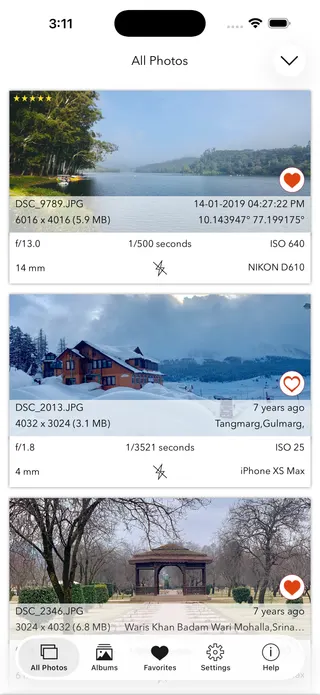
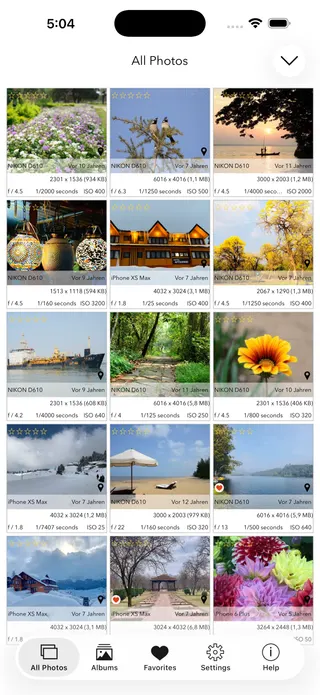
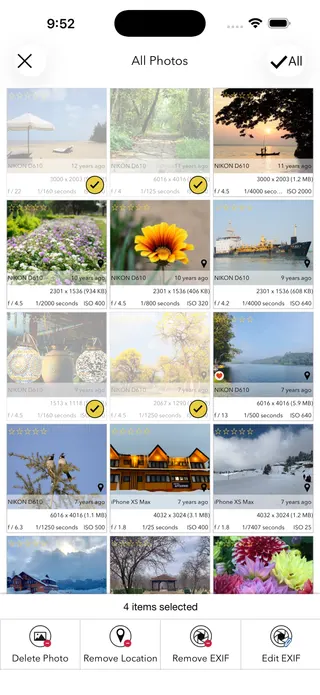
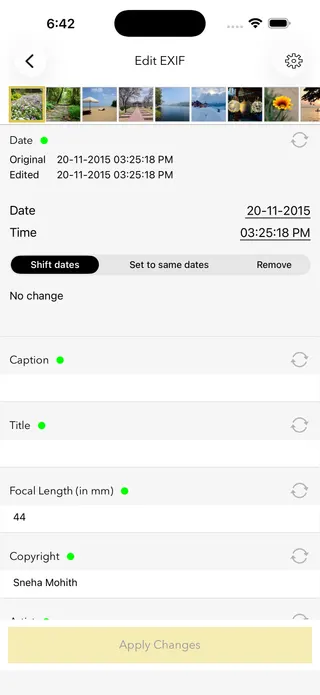
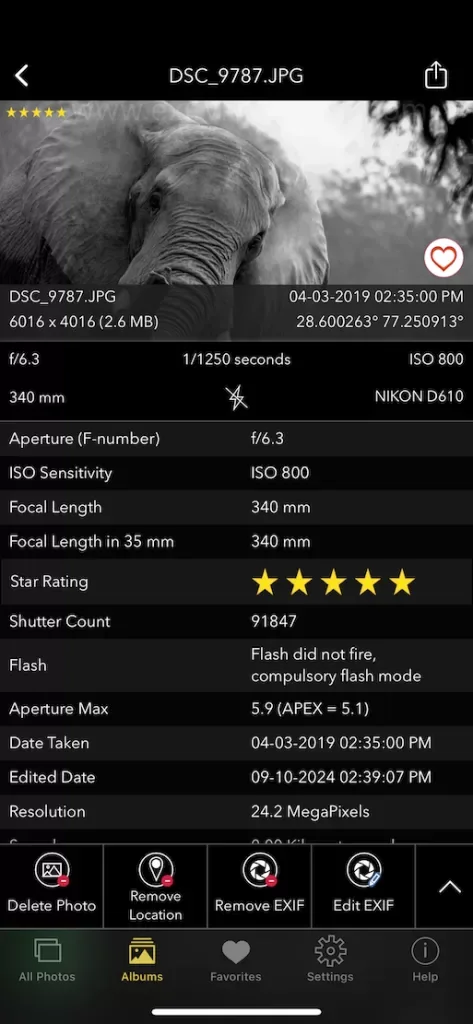
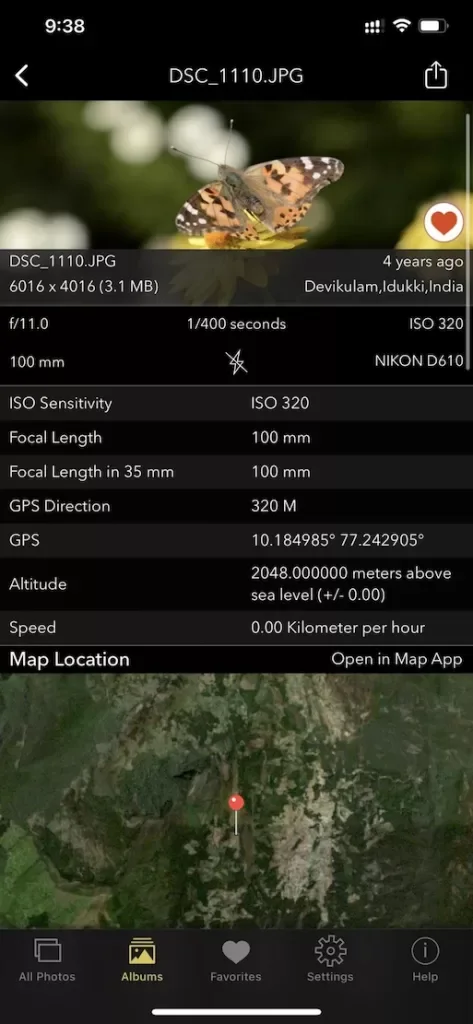
This page shows what’s inside a photo. EXIF Viewer by Fluntro goes further — view, edit, and remove metadata (including GPS geotags) right in your photo library, bulk-edit dates and locations, and share any photo with or without its EXIF. Buy once, use on iPhone, iPad and Mac. No subscription. Your photos never leave your device there either.
4.7· 1.9K ratingsFeatured by Apple
Camera Shutter Count — frequently asked questions
Short answers; the app’s guides go deeper.
What is a camera shutter count?
The shutter count (or shutter actuation count) is the total number of photos a camera has taken with its mechanical shutter. It works like the odometer on a car: it tells you how much the camera has been used, which matters because a shutter mechanism has a rated lifespan.
How do I check my camera's shutter count?
Take a photo (or use a recent one) straight from the camera, without editing it, and drop the file onto this page. If the camera stored the shutter count in the file's metadata, the number is shown instantly. Everything happens in your browser — the photo is never uploaded.
Which cameras' shutter count can this read from a photo?
Shutter count is read most reliably from Nikon cameras, which record it in the photo's MakerNotes. Many other brands, including Canon and Sony, do not write the shutter count into the image file at all, so it cannot be read from a photo. Phones use an electronic shutter and have no mechanical actuation count.
Why can't I read the shutter count of my Canon or Sony photo?
Canon and Sony (and most other brands) keep the shutter count inside the camera rather than writing it into each photo. Because it isn't in the file, no website can read it from an image. You can usually find it in the camera's menu, on the info/service screen, or with the manufacturer's desktop software.
Is my photo uploaded when I check the shutter count?
No. The photo is opened and read entirely in your browser, on your own device. It is never sent to a server, stored, or shared. Once the page has loaded, the tool even works offline.
What is a good shutter count when buying a used camera?
It depends on the model's rated shutter life. As a rough guide, under 20,000 is very low, under 50,000 is low to moderate, and over 150,000 is high for many consumer cameras. Always compare the count against that specific model's rated lifespan, since professional bodies are rated far higher than entry-level ones.
How long do camera shutters last?
Shutter durability is given as a rating, not a hard limit. Entry-level cameras are often rated around 100,000 actuations, while professional bodies are rated for 200,000 to 500,000 or more. Many shutters outlast their rating, and some fail earlier; the rating is a guide to expected life.
Does editing a photo remove the shutter count?
Often yes. Editing, exporting, resizing, or sharing a photo through social apps usually strips the MakerNotes where the shutter count lives. For an accurate reading, use an original, unedited JPEG straight from the camera.
Does this work with RAW files like NEF?
Yes — a Nikon NEF file also contains the MakerNotes, so the shutter count can be read from it. Your browser may not be able to display a RAW preview, but the count is still extracted. An original JPEG from the camera is the simplest option.
Do mirrorless cameras have a shutter count?
Mirrorless cameras with a mechanical shutter do have a shutter count. Shots taken with a fully electronic shutter may or may not be included, depending on the camera. For Nikon mirrorless bodies that record it in the file, the count can be read here.
Is this shutter count tool free?
Yes, it is completely free, with no account and no upload. For viewing, editing, and removing photo metadata on iPhone and iPad, the EXIF Viewer by Fluntro app is a one-time purchase.
Private by design
This tool was built so your photos never have to leave your device. Here’s exactly what that means for your data.
Nothing is uploaded
Your photo is opened and read entirely inside your own browser. It is never sent to a server, stored, or shared — once this page has loaded, it even works with your connection switched off.
No account, no tracking
There is no sign-up and no advertising cookies. The only thing saved on your device is your light or dark theme preference. Page views are counted without cookies or identifiers.
Your location stays yours
If a photo contains GPS coordinates, they are shown only to you, on your screen. We never see them, and any map link opens only if you choose to click it.
Nothing to collect
Because no personal data leaves your device, there is nothing for us to collect, log, or process. The full details are in our Privacy Policy.
The shutter count is read from your photo’s metadata exactly as the camera saved it, and is shown “as is.” It can be missing (many brands don’t store it, and editing removes it) and, in rare cases, inaccurate or reset. Please treat it as a strong indicator rather than proof when buying or selling a camera. This tool is provided free and without warranty; see our Terms & Disclaimer for details. See our Terms & Disclaimer and Privacy Policy.
More free photo tools
All 20 run in your browser — nothing is ever uploaded.
Inspect & verify
- EXIF Metadata ViewerSee every tag hidden in a photo
- Photo Privacy CheckerWhat does your photo reveal about you?
- Is This Photo Edited?Editing traces & AI markers
- What Camera Took This Photo?Identify the camera, phone & lens
- When Was This Photo Taken?Find the exact date & time
- Photo Location ViewerSee where a photo was taken
- Camera Shutter CountCheck a camera’s shutter actuations · you are here